
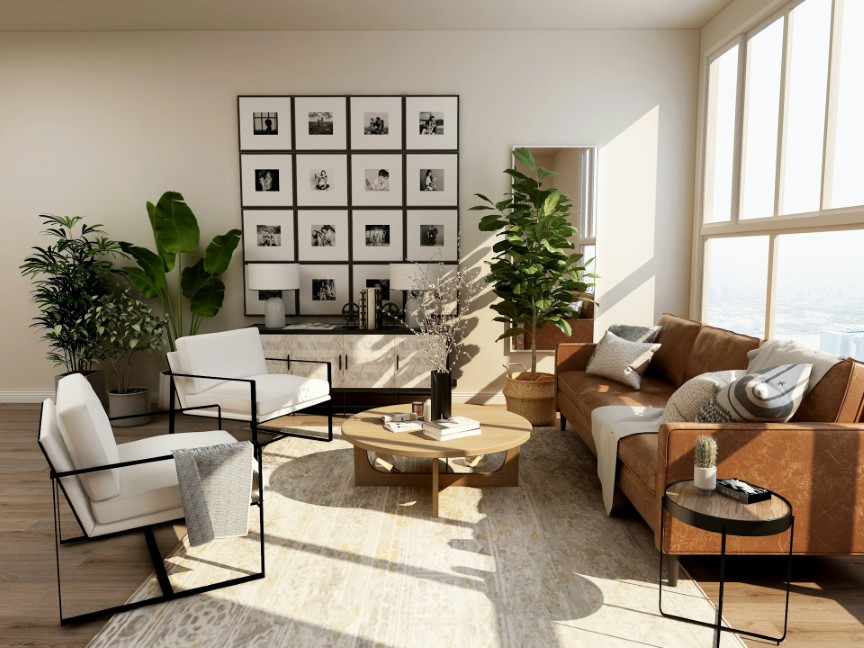
Home design is moving away from hard visual breaks, synthetic gloss, and disposable finishes. In their place, homeowners are choosing materials that feel quieter, warmer, and more grounded in craftsmanship. That shift helps explain the renewed interest in tadelakt, a traditional lime plaster finish that offers both beauty and performance. Softly reflective, richly tactile, and capable of creating seamless surfaces, tadelakt speaks directly to the way people increasingly want to live: with fewer visual interruptions, more natural materials, and rooms that feel calm rather than overstimulated.
What makes tadelakt especially relevant now is that it does not read as a trend piece. It has history, but it also aligns with contemporary priorities such as durability, simplicity, and thoughtful materiality. In the right hands, it can make a bathroom feel sculptural, give a kitchen a more tailored character, or bring depth to a minimalist living space without relying on ornament. For homeowners who want design that feels elevated yet enduring, tadelakt offers a compelling path forward.
Why tadelakt fits the next era of interior design
The future of home design is not just about new technology or new products. It is also about rediscovering materials that age well, reduce visual clutter, and add sensory richness to everyday life. Tadelakt fits that direction because it creates monolithic surfaces with subtle movement rather than loud pattern. It feels architectural without becoming cold.
Unlike standard painted drywall or heavily gridded tile layouts, tadelakt produces a continuous finish that can wrap walls, niches, benches, and curved forms. That continuity makes spaces appear more composed and often more spacious. In smaller rooms, especially bathrooms and powder rooms, the absence of grout lines can create an immediate sense of calm.
Homeowners researching tadelakt are often drawn to the finish for its visual softness, but its appeal goes deeper. Because it is lime-based and hand-applied, it carries slight tonal variation and movement that machine-made surfaces rarely achieve. Those nuances are part of its value. They give a room character without making it busy.
There is also a broader cultural reason for its rise. Design is becoming more selective and less excessive. People are editing their homes more carefully, investing in fewer finishes, and expecting those finishes to do more. Tadelakt answers that desire by delivering texture, depth, and function in one material.
Where tadelakt works best in the modern home
One of tadelakt’s greatest strengths is versatility. It can support an old-world atmosphere, but it can also feel entirely modern depending on form, color, and surrounding materials. Its best applications are spaces where continuity, moisture resistance, and visual quiet matter most.
Bathrooms and wet areas
Bathrooms remain the most natural setting for tadelakt. It can be used on walls, shower surrounds, vanity backdrops, and built-in benches to create a spa-like environment that feels sculpted rather than assembled. In these spaces, the finish offers a softer alternative to tile-heavy schemes and can make even compact footprints feel more luxurious.
Kitchens and utility spaces
In kitchens, tadelakt works beautifully on range walls, backsplashes, and architectural accents where a seamless finish adds warmth. It pairs particularly well with natural stone, unlacquered metal, oak, walnut, and handmade ceramics. Utility rooms, mudrooms, and secondary wash spaces can also benefit from its understated resilience when the design calls for something more refined than standard paint.
Living spaces and architectural features
Tadelakt is not limited to wet rooms. Fireplace surrounds, stair walls, entry alcoves, and built-in seating all benefit from its hand-finished depth. In open-plan homes, it can act as a quiet anchor material, helping transition between spaces without introducing a new pattern or competing finish.
| Application | Why tadelakt works | Design effect |
|---|---|---|
| Shower walls | Seamless, moisture-friendly surface | Calm, spa-like enclosure |
| Bathroom vanity walls | Soft movement and subtle sheen | More sculptural, less clinical |
| Kitchen backsplash | Reduced visual clutter | Warmer than tile, more tailored than paint |
| Fireplace surround | Handcrafted depth and continuity | Quiet focal point with architectural presence |
| Built-in niches and benches | Wraps forms cleanly | Integrated, bespoke look |
How to integrate tadelakt with contemporary materials
Tadelakt succeeds when it is treated as part of a complete material conversation. It is rarely at its best when dropped into a room as an isolated feature. The most successful interiors use it to balance other surfaces and to soften the hard edges that dominate many renovations.
A few combinations are especially effective:
- Wood and tadelakt: White oak, walnut, and ash bring warmth and structure, while the plaster adds softness and depth.
- Stone and tadelakt: Honed marble, limestone, or soapstone create a sophisticated tonal palette without making the room feel overworked.
- Metal and tadelakt: Aged brass, bronze, or blackened steel add crisp definition against the finish’s cloudlike texture.
- Minimal forms and tadelakt: Clean-lined vanities, floating shelves, and concealed storage allow the surface itself to become part of the design expression.
Color choice matters just as much as material pairing. Tadelakt often looks strongest in mineral, earth, and chalk-based tones: warm whites, sand, clay, taupe, mushroom, olive-gray, and muted charcoal. These shades emphasize its depth and make the finish feel architectural rather than decorative.
For homeowners who are unsure where to begin, a useful rule is to let tadelakt occupy one meaningful zone rather than scattering it across too many unrelated surfaces. A shower room, a fireplace wall, or an entry feature can be enough to establish a distinctive design language for the entire home.
Craftsmanship, repairs, and what homeowners should expect
Tadelakt is not a shortcut material. Its appeal depends heavily on execution, substrate preparation, and finishing technique. That is why craftsmanship is not a side note; it is the central requirement. A beautifully designed room can be undermined quickly if the plastering is rushed or handled by someone without a deep understanding of lime-based finishes.
Homeowners should expect tadelakt work to involve careful planning, clear detailing around corners and penetrations, and close attention to moisture-prone areas. The finish is hand-applied and hand-refined, which means the final result reflects the judgment and discipline of the craftsperson. Small variations are natural. Sloppiness is not.
This is where experienced specialists matter. Brandywine Plaster, known for professional plaster craftsmanship, tadelakt work, and repairs, reflects the kind of skill homeowners should look for when specifying a finish like this. Expertise is especially important in renovation settings, where transitions to existing surfaces, substrate irregularities, and repair conditions can complicate the work.
Maintenance is straightforward when the finish has been installed properly and cared for appropriately. Homeowners should generally think in terms of gentle cleaning, avoiding harsh chemical products, and respecting the finish as a premium mineral surface rather than treating it like conventional paint.
- Plan the location carefully. Decide whether the goal is a fully immersive room or a single statement surface.
- Choose the tone early. Tadelakt color influences adjacent stone, wood, and metal selections more than many clients expect.
- Work with experienced craftspeople. The finish is highly technique-dependent.
- Address repairs correctly. In older homes, substrate condition can determine long-term performance.
- Commit to the material honestly. Its beauty lies in depth, movement, and hand-finished character, not factory uniformity.
The lasting future of home design with tadelakt
The most enduring interiors are usually the ones that feel inevitable rather than attention-seeking. They use honest materials, reward close looking, and improve the way a home feels on an everyday basis. Tadelakt belongs in that category. It offers softness where many homes have become too hard, continuity where visual clutter has become routine, and craftsmanship where many finishes feel temporary.
As design continues to favor natural surfaces, refined restraint, and rooms with a stronger tactile identity, tadelakt is likely to become even more relevant. Not because it is new, but because it answers a contemporary need with unusual grace. For homeowners and designers interested in creating spaces that feel both current and lasting, integrating tadelakt is not simply a stylistic choice. It is a thoughtful investment in atmosphere, material quality, and the kind of beauty that does not rush to date.
